In 2007, Men’s Fitness magazine named Houston, Texas the fattest city in America.
Not once.
Not twice.
But for the third year in a row.
At the time, I was deep into running and triathlons. I knew firsthand that Houston had a large, passionate fitness community. People trained hard here. People cared. So that headline stopped me in my tracks.
The fattest city in America? Really?
I didn’t have an answer, but I did what most of us do with interesting ideas we’re not ready to act on yet—I filed it away.
A Tale of Two Cities
The following year, Men’s Fitness released their annual rankings again. Houston had finally lost the “fattest city” title (thank you, Las Vegas), but we were still firmly planted in the Top 10.
What really caught my attention that year, though, wasn’t Houston at all.
It was Colorado Springs, Colorado—named the Fittest City in America.
The article didn’t credit miracle diets or elite athletes. Instead, it talked about something far more interesting: culture. A culture of fitness.
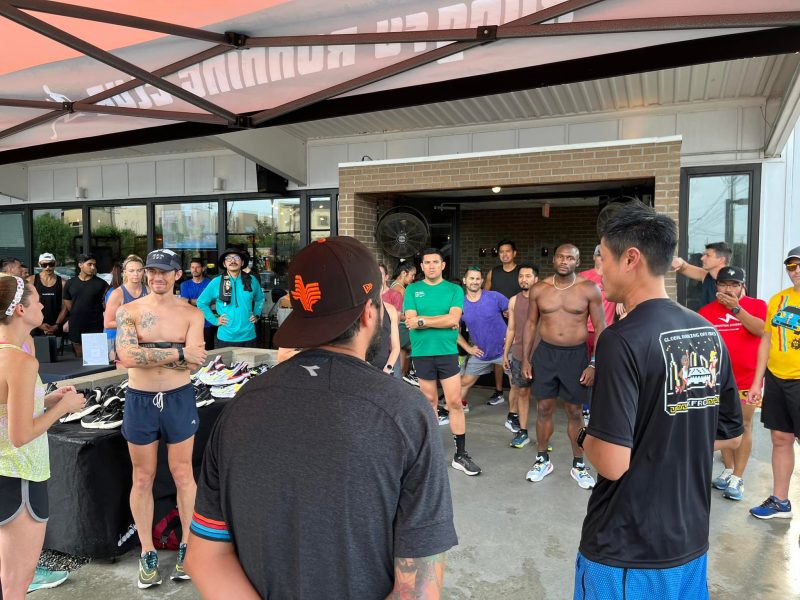
The centerpiece of that culture? A free, no-frills running club that met every Tuesday night at an Irish pub called Jack Quinn’s. Hundreds of people would show up. They’d run a casual 5K together, then grab beers, eat a little food, and hang out. No pressure. No egos. No finish-line clocks.
Just people, movement, and community.
Once again, I filed the idea away—but this time, it stuck.
When an Idea Finds Its First Yes
Fast forward to the summer of 2008.
I was spending a lot of time at a locally owned running store near Rice University: Fleet Feet. Like many runners, I was in there often enough that conversations with the owner were casual and frequent. During one of those visits, the idea that had been rattling around in my head finally came out.
I mentioned the concept of a free weekly run that ended somewhere social—maybe even a pub.
He loved it.
Immediately.
Fleet Feet became the first sponsor to jump on board, offering to donate technical running shirts for runners who showed up consistently. (Ten runs eventually became the magic number.) That enthusiastic yes was a quiet but important moment—it was the first real signal that this idea might actually work.
A Pub, a Startup, and a Wild Idea
Around the same time, my three co-founders and I were in the early days of launching a biotechnology startup. Two of them were professors at Rice University, and until we had an actual office, we needed a place to meet.
That place became Brian O’Neill’s Irish Pub, just steps from campus. BON quickly turned into our unofficial headquarters.
One night during a meeting there, I decided to finally pitch the idea of hosting a weekly running club—coincidentally on one of their slower nights, Tuesday.
The deal was simple:
- The pub would host the group
- Provide runner drink specials and free appetizers
- I’d try to bring them new customers on an otherwise quiet night
The owner loved it. Immediately.
He didn’t just say yes—he started promoting it to regulars right away.
With a running store and a pub both onboard, the idea suddenly felt very real.
So I did what people did back then: paper flyers and posts on early online forums like Yelp.
The Night It All Started
On Tuesday, October 15, 2008, the Brian O’Neill’s Running Club officially launched.
Twenty-five people showed up.
And it was a blast.
The owner was so excited he had the kitchen prepare free pasta and salads for everyone—and even convinced a beer distributor to donate a couple cases of beer. After a casual three-mile run around the Rice University campus, we all met back at BON to eat, drink, and hang out.
Most of us stayed until 9 p.m.
More importantly, everyone went home and told their friends.

When Something Clicks
The following Tuesday, 50 people showed up.
The next week, nearly 80.
Within two months, we were averaging over 100 runners every Tuesday night. By late summer—despite the brutal Houston heat—we topped 300 people on a single night.
Brian O’Neill’s maximum capacity was 255.
Runners spilled into neighboring bars. The entire stretch of Morningside Drive came alive every Tuesday night. What started as a casual run became a weekly ritual—and a community.
Without ads.
Without membership fees.
Without really meaning to.
What This Became
That simple idea—a free run, a welcoming place, and people who wanted to move together—became the foundation for what would eventually grow into FFP Running Clubs.
At the time, none of us were trying to build a national organization. We were just trying to create a reason for people to show up on a Tuesday night.
Turns out, that’s often how the best things start.